
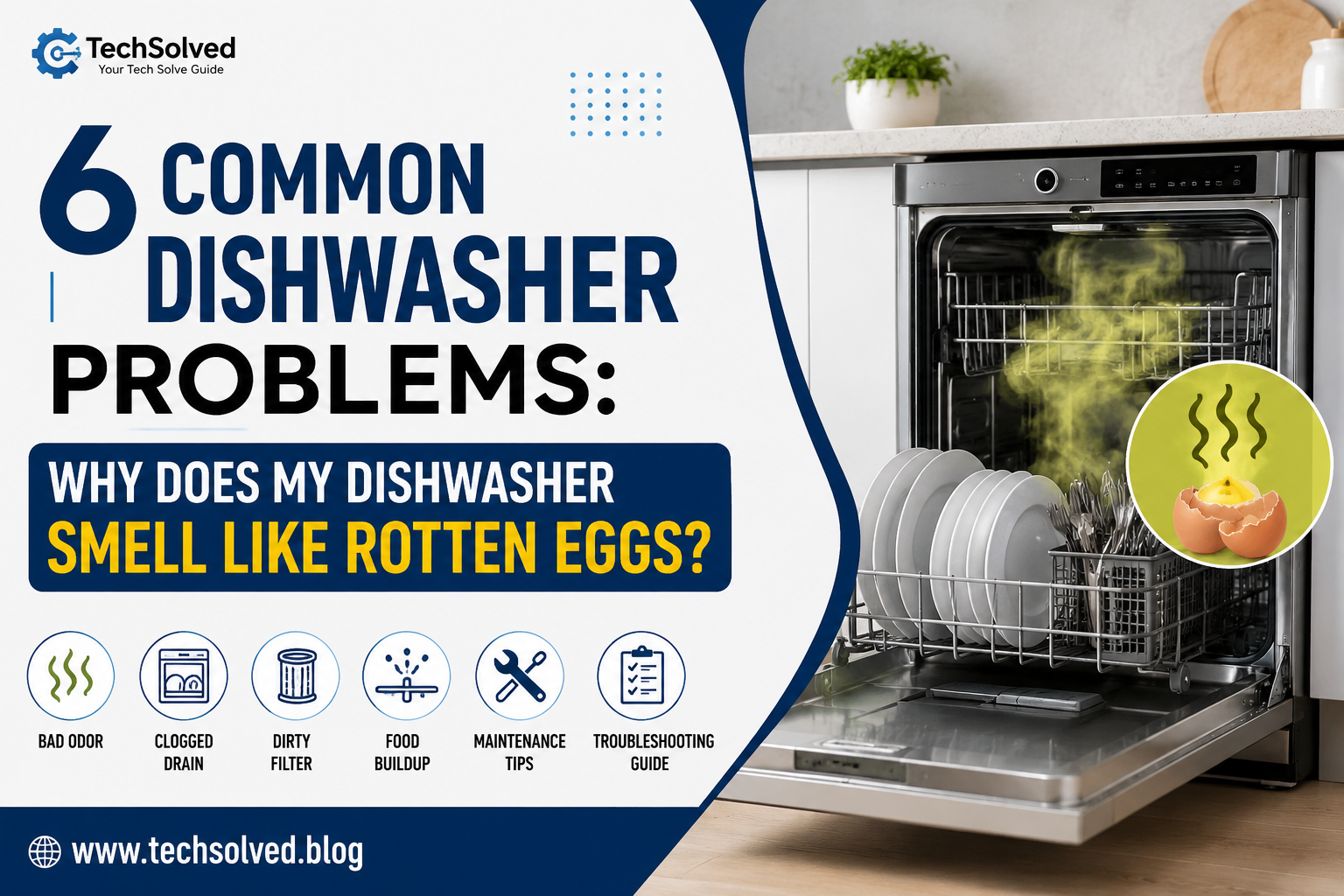
A dishwasher that smells like rotten eggs is typically caused by trapped organic matter, bacterial growth in stagnant water, or a sewer gas backflow entering through a clogged drain line or garbage disposal connection. When food particles decompose inside the filter or tub corners without proper drainage, anaerobic bacteria produce hydrogen sulfide gas, which creates a distinct sulfur smell. Resolving this issue usually requires cleaning the filter, clearing the drain hose air gap, running a sanitizing cycle with white vinegar or baking soda, or clearing municipal sewer trap lines.
At TechSolved (www.techsolved.blog), we believe that understanding your kitchen appliances shouldn’t require an engineering degree. Below, we break down the most common dishwasher problems, why they happen, and how you can perform a DIY dishwasher problems repair to keep your kitchen running smoothly.
Understanding Why Dishwasher Problems Occur
Your dishwasher is a hardworking combination of plumbing, electrical, and heating systems. Over time, hard water mineral build-up, detergent residue, and trapped food scraps interfere with these components. When one part of the ecosystem fails—whether it’s the spray arms, the drain pump, or the heating element—it triggers a chain reaction that results in dirty dishes, standing water, or foul odors.
Before calling an expensive technician, identifying the exact symptoms will save you time and money.
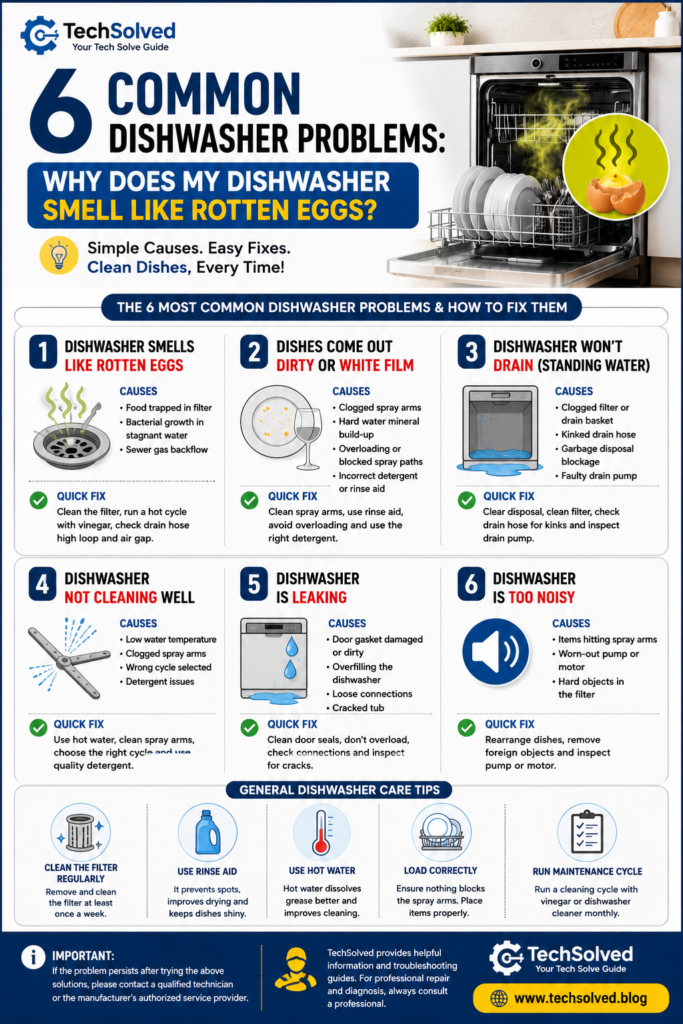
Problem 1: Why Does My Dishwasher Smell Like Rotten Eggs?
Of all the dishwasher problems homeowners encounter, a strong sulfur or rotten egg smell is easily the most unpleasant.
Primary Causes of the Rotten Egg Smell:
- Decomposing Food & Bacterial Growth: Organic food remnants settle into the bottom filter, drain basket, or spray arm holes. In the damp, dark environment of your appliance, anaerobic bacteria feed on these scraps and release hydrogen sulfide gas.
- Stagnant Drain Water: If the drain pump or drain hose is partially blocked, dirty water pools beneath the filter where you can’t easily see it. Over 24 to 48 hours, this trapped water decays.
- Sewer Gas Backflow: If your dishwasher’s drain hose lacks a proper high loop or air gap, sewer gases from your home’s main plumbing or garbage disposal can back up into the appliance.
How to Fix the Rotten Egg Odor (Step-by-Step DIY Repair)
- Step 1: Clean the Manual Filter: Remove the lower rack, twist out the cylindrical filter assembly at the bottom of the tub, and scrub it under warm running water with a soft nylon brush and dish soap.
- Step 2: Wipe Down Door Seals: Grease and mold collect around the rubber door gasket. Wipe down all rubber seals using a microfiber cloth dampened with warm water and mild detergent.
- Step 3: Run a Vinegar Wash: Place a bowl filled with 1 to 2 cups of plain white distilled vinegar on the top rack of an empty dishwasher. Run a full cycle on the hottest water setting. Vinegar neutralizes alkaline deposits, breaks down grease, and kills odor-causing bacteria.
- Step 4: Baking Soda Polish: After the vinegar cycle completes, sprinkle 1 cup of baking soda across the bottom tub floor and run a quick hot rinse cycle.
- Step 5: Check the Drain Hose High Loop: Ensure the flexible drain hose beneath your sink loops higher than the drain inlet level. This simple gravity curve prevents dirty sink water and sewer gas from flowing backward into your machine.
Problem 2: Dishes Coming Out Dirty or Covered in White Film
If your plates come out greasy or your glasses look cloudy, you are dealing with one of the most widespread common dishwasher problems.
Root Causes & Troubleshooting Solutions:
- Clogged Spray Arm Jets: Mineral deposits from hard water or stray food seeds (like lemon seeds or rice) plug the tiny nozzles on the spray arms. Detach the spray arms and clear each nozzle hole using a toothpick or pin.
- Hard Water Mineral Build-up: Calcium and magnesium in hard water leave a chalky film on glassware. Using a rinse aid fluid continuously or installing a water softener remedies this issue immediately.
- Overloading & Blocked Spray Paths: Stacking tall plates near the front or nesting bowls together blocks water circulation. Always verify that spray arms spin freely without hitting oversized cookware.
- Error Code Triggers: On electronic models, sensor failures or improper water temperature can halt cycle progression. If you own a Frigidaire model, consult our guide on Types of Frigidaire Dishwasher Error Codes and Solutions to diagnose heating or sensor issues.
Problem 3: The Dishwasher Won’t Drain (Standing Water in the Bottom)
Finding an inch of soapy, dirty water at the bottom of the machine at the end of a cycle indicates a drainage failure.
Step-by-Step Dishwasher Problems Repair for Drainage:
- Clear Your Garbage Disposal: Dishwashers usually share a drain route with your kitchen sink’s garbage disposal. If the disposal chamber contains food waste, the dishwasher cannot pump water out. Run the disposal with cold water for 30 seconds.
- Inspect the Drain Hose for Kinks: Pull the machine forward slightly or look under the sink cabinet to ensure the corrugated plastic drain hose isn’t pinched or bent.
- Clean the P-Trap and Air Gap: If your sink counter features a chrome air gap cylinder, unscrew the cap and clean out accumulated grease and food sludge using a small wire brush.
Problem 4: Dishwasher Is Leaking Onto the Kitchen Floor
A puddle of water under your appliance can quickly ruin hardwood floors or kitchen cabinets if left unaddressed.
Where the Leak Comes From & How to Repair It:
- Worn Door Gasket: Over time, the rubber door seal cracks, hardens, or becomes unseated. Inspect the seal perimeter for gaps or tears. Replacements press into the door groove without complex tools.
- Incorrect or Excess Detergent: Using standard liquid dish soap (like Dawn) instead of automatic dishwasher detergent creates mountains of foam that force water past door seals. If foam overflows, pour 1/2 cup of cooking oil into the tub and run a drain cycle to breakdown suds.
- Faulty Water Inlet Valve: If the machine leaks even when it is turned off, the internal water inlet valve located behind the lower kickplate may be stuck open and require replacement.
Problem 5: The Dishwasher Isn’t Drying Dishes Properly
Opening your appliance only to find dripping wet plates is frustrating and requires manual hand-drying.
Why Drying Fails:
- Empty Rinse Aid Dispenser: Modern dishwashers rely heavily on liquid rinse aid to lower surface tension on water, allowing moisture to sheet off plates rather than forming droplets. Keep the dispenser reservoir filled.
- Burnt-Out Heating Element: The exposed metal coil at the tub base heats water and aids drying. Inspect the element for visible blistering, cracking, or discoloration. You can test it for electrical continuity using a multimeter.
- Plastic Item Properties: Plastics do not hold thermal energy as well as ceramic or stainless steel, so droplets condense on them more readily. Place plastic items on the top rack and allow the tub to vent after the cycle completes.
Problem 6: Dishwasher Is Unusually Noisy or Humming
While a soft hum and rhythmic sloshing are normal operating sounds, loud grinding, squealing, or thumping indicates a mechanical issue.
| Sound | Likely Cause | Recommended DIY Action |
| Loud Rattling / Thumping | Spray arm striking dish or utensil | Rearrange dishes so spray arms spin freely |
| High-Pitched Squealing | Wash pump bearings worn out | Inspect wash motor; replace motor pump assembly |
| Hard Grinding Noise | Bone, glass, or hard scrap in chopper blade | Clear pump basin impellers of hard debris |
| Loud Buzzing / Humming | Drain pump jammed or stuck valve | Clear debris from drain pump housing |
Summary Checklist for Preventive Dishwasher Maintenance
Performing routine upkeep keeps your unit operating efficiently and prevents severe dishwasher problems:
- Weekly: Clean the removable tub filter and wipe down the rubber door gasket.
- Monthly: Run a sanitizing wash with white vinegar to eliminate mineral buildup, bacteria, and hidden odors.
- Quarterly: Inspect spray arm nozzles for blockages and verify that the drain hose high loop remains secure under the sink.
- Annually: Inspect the water inlet supply line for wear, check motor mounting brackets, and clear any residue from the air gap.
Conclusion
Experiencing common dishwasher problems doesn’t mean you need to invest in a brand-new appliance. From neutralizing rotten egg sulfur smells with simple household white vinegar to clearing clogged spray arms, most routine dishwasher problems repair tasks can be safely performed at home in under an hour. By sticking to a simple monthly maintenance schedule, you can keep your kitchen smelling fresh and ensure your dishes come out sparkling clean every single cycle.
For more hands-on appliance troubleshooting guides, step-by-step repair blueprints, and error code breakdowns, visit us regularly at TechSolved (www.techsolved.blog).
Need Help? Contact an Appliance Specialist!
If you’ve cleaned your filters, checked your drain lines, and run sanitizing washes, but your dishwasher still smells like rotten eggs, won’t drain, or displays persistent electronic error codes, it may be time to consult a professional. Complex electrical faults, failing wash motors, or main plumbing backups require specialized diagnostic equipment.
Have questions about an error code or an unusual noise? Reach out to our community team at TechSolved by visiting www.techsolved.blog, or contact a licensed local home appliance repair specialist to schedule an in-person diagnostic inspection.
Frequently Asked Questions
Q1: Why does my dishwasher smell like rotten eggs when it runs?
A: A rotten egg smell is usually caused by decaying food scraps trapped in the lower filter, standing stagnant water in the drain hose, or sewer gas backing up into your dishwasher due to a missing drain hose high loop or blocked garbage disposal connection.
Q2: Is it safe to use bleach to clean a dishwasher and remove smells?
A: You should only use bleach if your dishwasher interior is made entirely of plastic. Never use bleach in a stainless steel dishwasher, as the chlorine will corrode and pit the steel tub and internal seals. Use white distilled vinegar or baking soda instead.
Q3: How often should I clean my dishwasher filter to prevent odors?
A: For optimal performance, clean your manual mesh filter at least once a month. If you don’t scrape or pre-rinse plates thoroughly before loading, clean the filter every 1 to 2 weeks.
Q4: What should I do if my dishwasher displays an error code on the screen?
A: Electronic error codes indicate specific component issues, such as heating faults or drainage errors. If you own a Frigidaire model, check out our detailed guide on Types of Frigidaire Dishwasher Error Codes and Solutions to decode the signal and apply the right fix.
Disclaimer: The information provided in this article by TechSolved (www.techsolved.blog) is strictly for educational and informational purposes. While many basic maintenance and cleaning tasks can be completed safely by homeowners, appliance repairs involving electrical wiring, main water supply lines, or gas components carry inherent risks. If you are unsure of how to perform a repair safely, please disconnect power and water supplies to the appliance and consult a licensed appliance repair technician or certified plumber.